Build Something You Cannot Sell
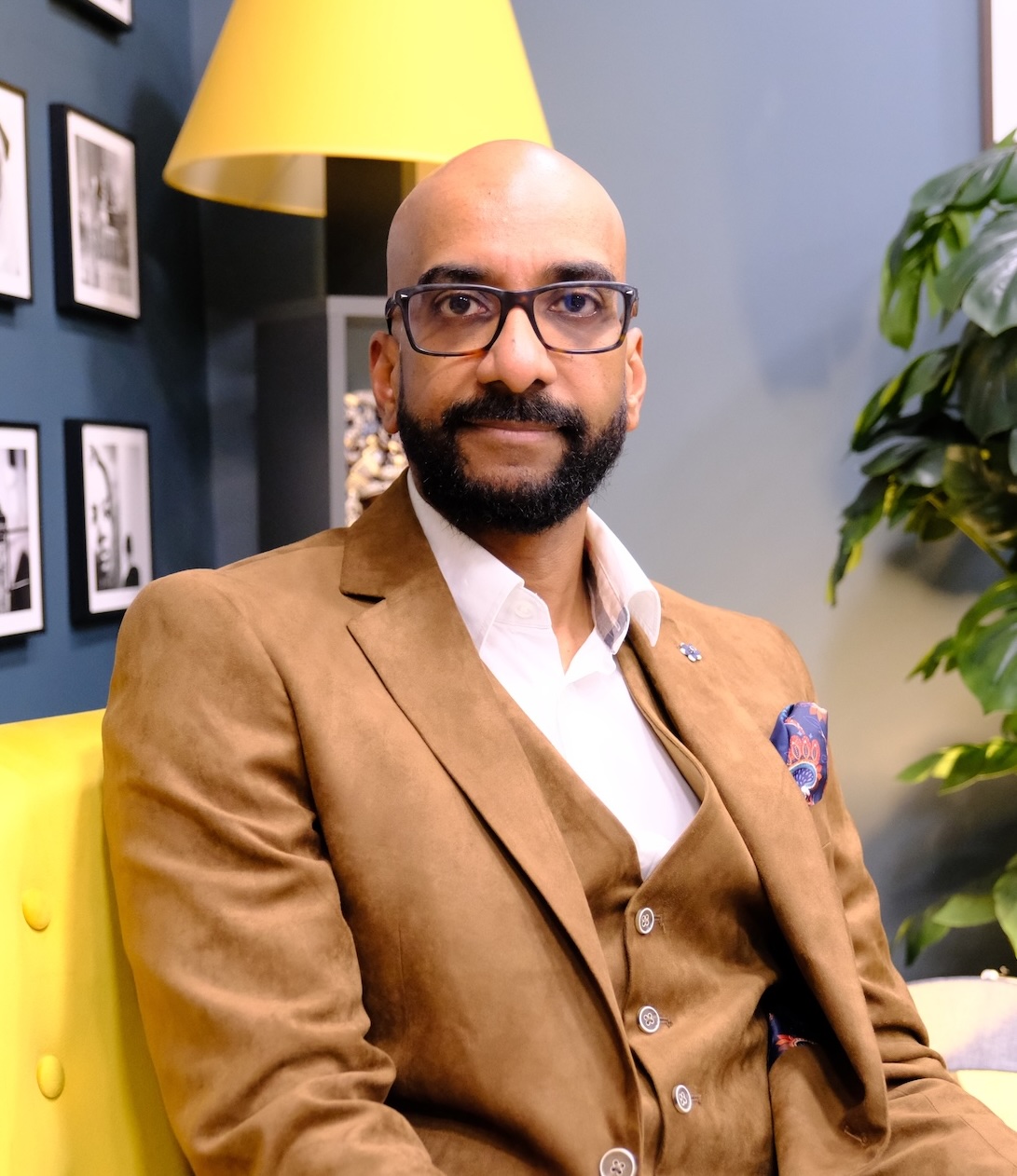 Mash Bonigala
 Last year I started The England Archive. A three-year documentary photography project recording the people keeping England’s traditions, craft, and landscape alive. Eight regions. Five subject categories. Farmers, blacksmiths, boat builders, hedge layers, bell ringers. People whose work predates the internet by centuries and whose trades will vanish within a generation if nobody bothers to document them.
There is no revenue model. There is no investor deck. There is no exit. The project exists because it should exist, and because I had the resources and the skill to make it happen. That is the entire business case.
It is the most important thing I have ever built.
The gap after the exit
Every successful founder I know hits a point where the scoreboard stops making sense. You have built companies. You have made money. You have proven to yourself and everyone else that you can take an idea and turn it into something real. And then one morning you wake up and the question is no longer “can I build something?” but “should I build something that matters beyond my own balance sheet?”
That question sat with me for years before I acted on it. I kept building companies because that is what I knew how to do. Each one was successful by conventional measures. Each one left me feeling like I was solving problems that would solve themselves eventually anyway, with or without me.
The England Archive came from a different place. It came from travelling through rural England and noticing that the people who carry the oldest knowledge, the practical, physical, handed-down-through-generations knowledge of how to work with land, water, wood, and stone, were aging out. Their children had moved to cities. Their apprentices had found easier work. The traditions they held were one generation from disappearing.
Nobody was recording this systematically. A few photographers had captured individual craftspeople. A few documentaries existed. But there was no comprehensive, region-by-region visual record of the people and practices that have shaped England’s landscape for centuries. So I started making one.
Why founders are uniquely positioned for this
Founders have a specific set of skills that most philanthropic efforts desperately need and almost never get. We know how to scope a project. We know how to build systems that scale. We know how to execute over years, through boredom and setbacks and the long middle stretch where nobody is paying attention.
Most philanthropic work suffers from one of two problems. Either it is well-funded but poorly executed, because the people running it have good intentions and no operational skill. Or it is brilliantly conceived but starved of resources, because the people behind it have vision and no capital.
Founders who have built and exited have both. Operational skill and capital. That combination is rare and it is wasted if the only thing you do with it is build another SaaS company.
The project that chose me
I am a photographer. I have carried a Leica through sixty countries. But The England Archive is different from anything I have shot before because it is driven by urgency rather than aesthetics. The people I am photographing are in their sixties, seventies, eighties. The window for this work is measured in years, not decades. If I do not do it now, the opportunity is gone permanently.
That urgency changed how I approach the project. I am not waiting for perfect light or ideal conditions. I am driving to farms and workshops and harbours and getting the shot because the person in front of me might not be doing this work in five years. The craft might not exist in ten.
This is the kind of pressure that founders understand instinctively. The market window. The timing that cannot be manufactured or extended. Except in this case, the market is a generation of people, and when the window closes, it closes forever.
What it gives back
I want to be honest about this. Philanthropic work is not selfless. It is not supposed to be. The England Archive has given me more than I have given it.
It reconnected me with the physical world after twenty years of building digital products. It gave me conversations with people who measure their work in decades and generations rather than quarters and sprints. It reminded me that some things worth building have no metrics, no dashboards, and no growth targets. They simply need to exist, and the act of making them exist is its own reward.
It also sharpened my work as a founder and investor. Spending time with people who have mastered a single craft over forty or fifty years recalibrated my understanding of what depth actually looks like. It made me more patient. It made me more attentive to quality over speed. It made me a better judge of whether a founder I am backing genuinely understands their domain or is just skating on the surface of it.
The case for building something unsellable
If you have built companies, made money, and proven yourself in the market, consider this: the next thing you build does not need to have a business model.
Find a problem that matters to you personally. Something you have the skills to address and the resources to fund. Something that would not exist without you. Something with a timeline that creates urgency. And build it the way you built your companies, with rigour, with systems, with the operational seriousness that separates a real project from a hobby.
The world has enough SaaS products. It has enough marketplaces. It has enough apps. What it lacks is people with the ability to build things at scale choosing to build things that serve a purpose beyond profit.
You already know how to build. The question is whether you are willing to build something you cannot sell. Something where the only return is the knowledge that it exists because you decided it should.
That is the project worth finding. And in my experience, it finds you the moment you stop looking for the next deal and start paying attention to what actually matters.